Son Village - Volume 6. An eco-friendly oven.
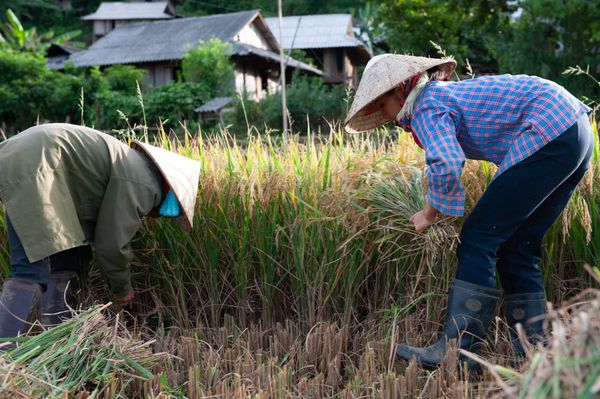
Eco-friendly oven building in a remote mountain village in Northern Vietnam.
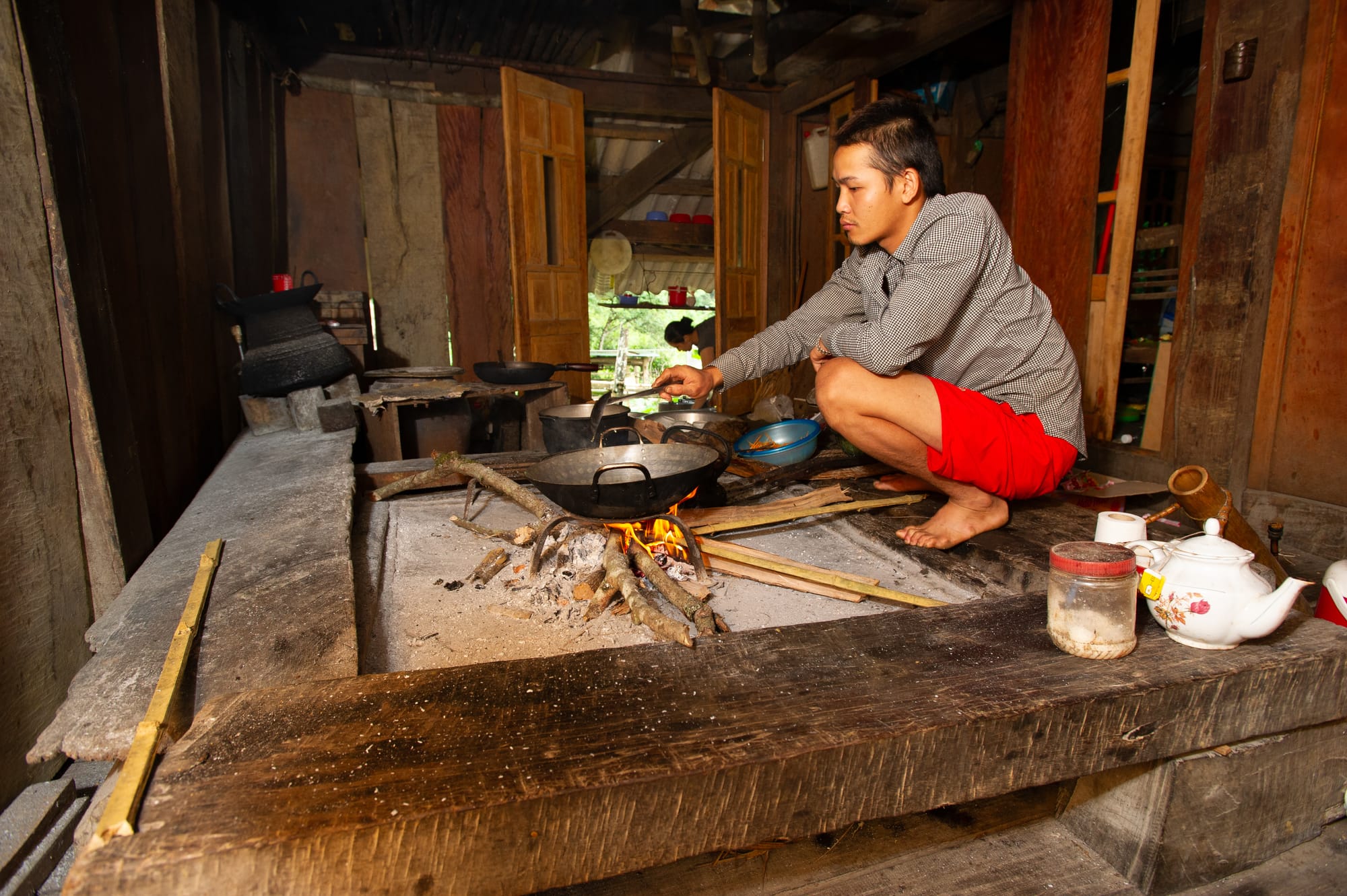
I remember I enjoyed sitting around the hearth in the kitchen as they were cooking, sitting and having their evening drink, tea or perhaps a little rice wine. Freshly fermented and brewed rice wine: have you ever tasted it, sucked in through the natural bamboo straws, felt the sensation as it hit your mouth and throat and finally your head?
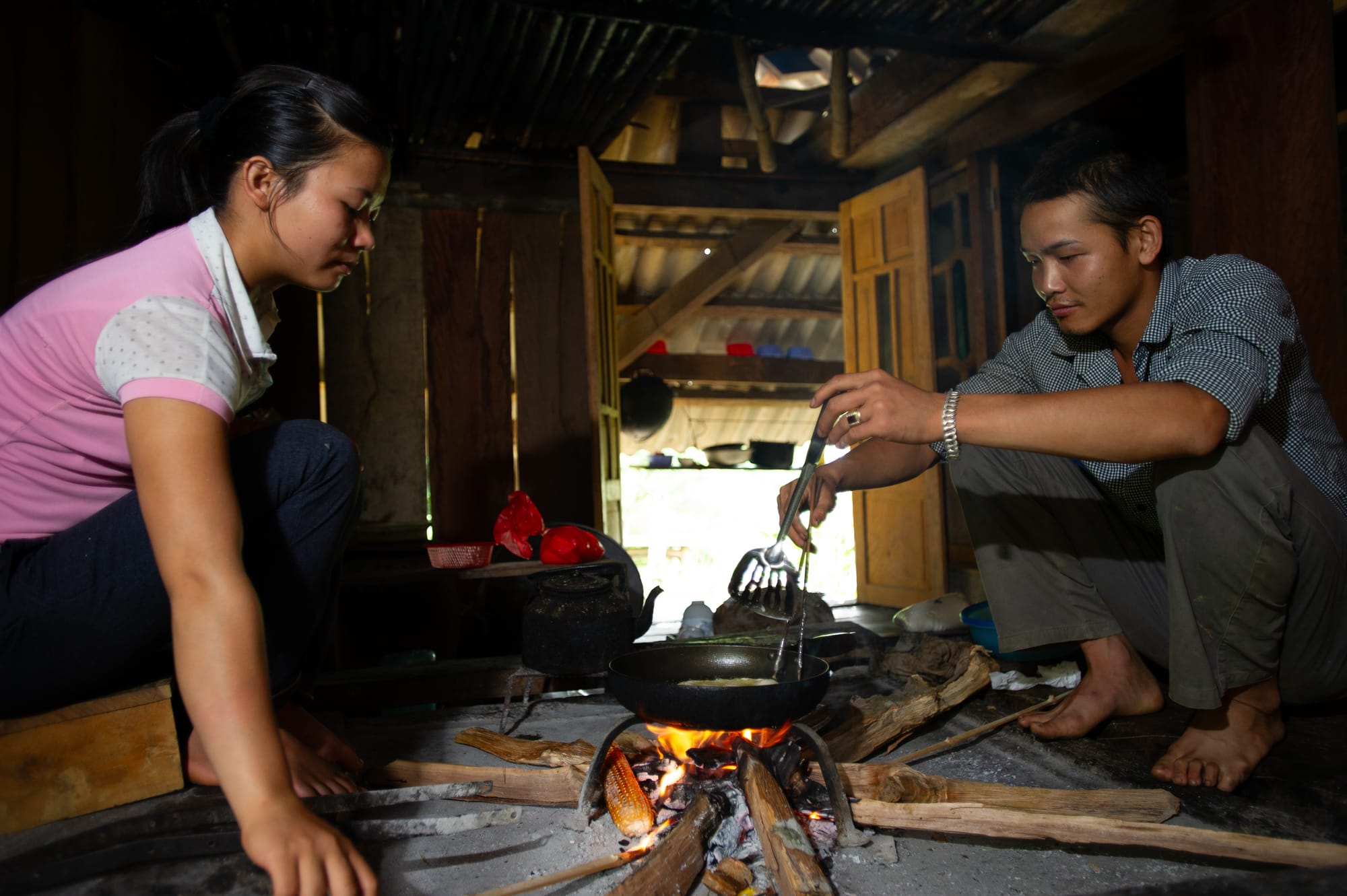
It was a pleasant atmosphere inside, the fire feeding the smoky haze across the room, conversations incomprehensible but convivial, the outside dark and damp, an incessant muted background provided by the jungle fauna or village dogs.
I realized, thinking back to my schoolboy physics times, that a huge amount of wood from the forest would need to be collected daily, as I'd seen when I followed the lady of the house into the jungle, just to satisfy the fuel needs of one household.
We then got to talk a little bit about the aid, a little bit of charity money, that was coming to the village to help them construct some ovens outside of the houses: contained cooking fires, like pizza stoves, should be more fuel efficient and then perhaps require less fuel to cook the same amount of food or boil the same amount of water. Apparently, the funding for the ovens had been raised by schoolkids from international schools on holiday to Vietnam.
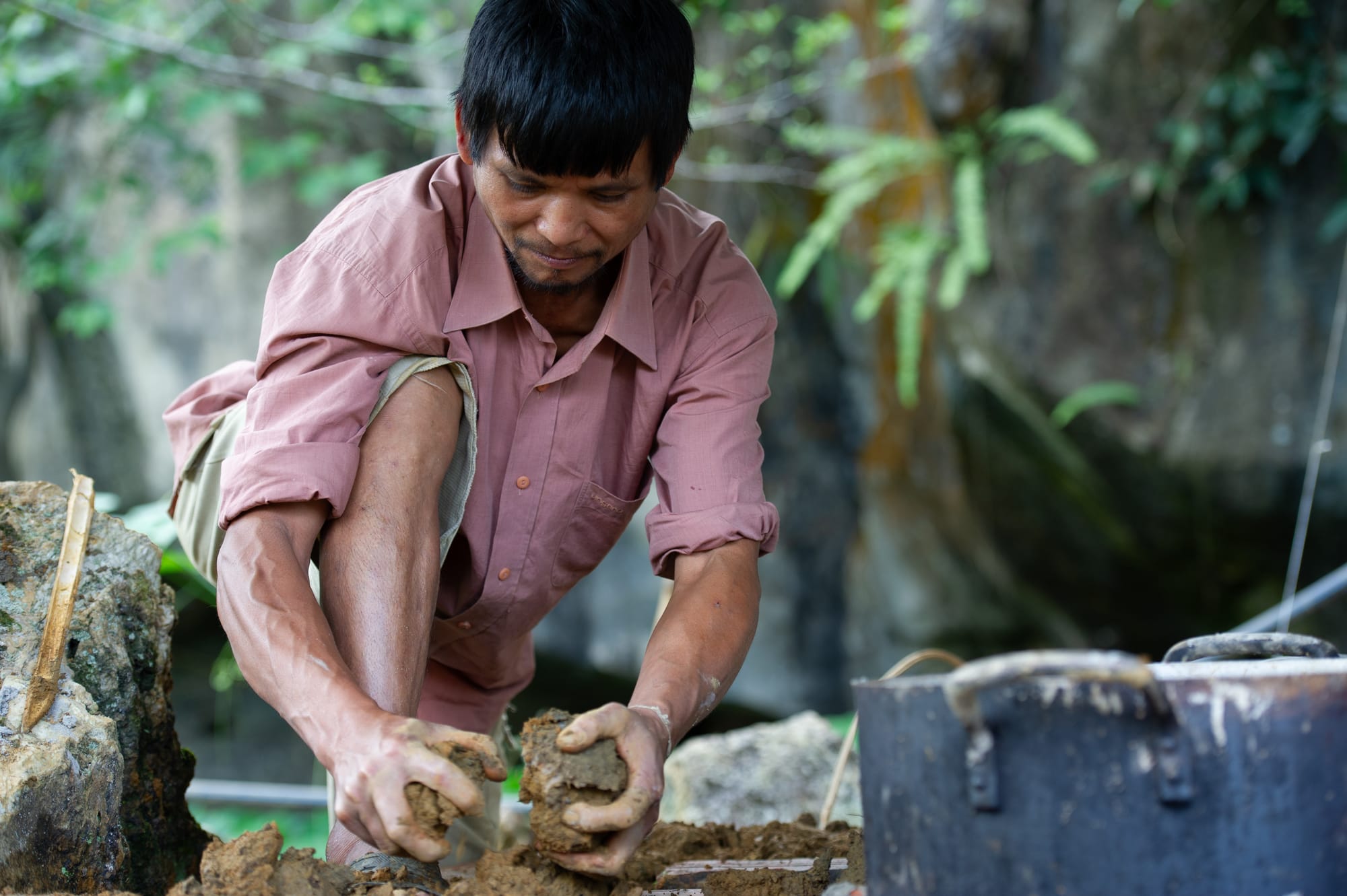
I heard that they were building one or two of these brick ovens in each village; I was keen to see that process.
Back into the physics class, I tried to think about, as any thoughtful learner of physics would, how much difference an oven would make compared to an open hearth. In the same way as one first school physics project was to estimate the number of male barbershops in the UK. I thought: a power station, a coal-fired power station in the UK, I seem to remember its efficiency, the amount of energy that they got out of burning the coal — which changed into electricity — was somewhere around the 30% mark. Nuclear was higher, I recall. Not particularly efficient, but required in those days to produce the electricity for everyday electricity in our homes. No solar panels much or wind turbines in my early childhood days.
I couldn't remember the efficiency of a combustion engine, petrol or diesel fuel. I couldn't remember the efficiency of those when I sat pondering, looking across the smoke-filled fug in the room. But, based on the power station, I started my assumptions; I knew that a transformer, of course more precisely an electrical transformer, was just about the most efficient energy transfer device on Earth, with something like, in a good build, 98%, 97% efficiency. Very few losses. Just the humming and warming that sometimes you see in Southeast Asia on a hot day, resulting in an exploding transformer on a pole.
That popped into my mind, strangely, as exploding pole transformers in this region seem to be, simply put, not uncommon. But anyway, I knew an open fire in a hearth would be nowhere near as efficient. In fact, it would be at the opposite end of the efficiency spectrum. So, I guess something like perhaps 5% rather than 95%.
That left me pondering further: how much more efficient would a contained fire be, where more of the thermal energy was directed into heating the water or the foodstuff, and less was lost as heat dissipated into the surroundings and, in the case of the house, into the air in the room or into the stone hearth or even into the wooden walls?
I guess that if they could increase the efficiency from my estimated, the guess I'd made of 5% for an open fire, even if they could improve it to something like 15%, maybe 20%, they'd need to chop about four times less fuel per day, which seemed a reasonable thing to do.
Thus, as I retired that evening, I had in my head the thoughts of: I want to see them build one of these fire pits, cooking areas, firewood ovens, the next day.
You always awake early in these remote villages; the cockerels help you pull yourself out from your sweet dreams and slumber. Half past five or before every morning with no weekend break. And then the kitchen commences its clanking as the early risers in the families rise and start making some food or going out to manage the early day chores.
Usually, the adolescents in the family will stay and do some cooking or forming the breakfast; perhaps noodles, perhaps rice for the day, tea, hot water, whilst others go to collect firewood, as we've already seen, or start other routine tasks.
A celebrity breakfast that morning, my last full day in Son: they'd brought in some bread from the local valleys. I think somebody had ventured down one of the rocky paths on a motorbike, and they seemed to have a small supply of baguettes, banh mi as they tend to call them in Vietnam.
I enjoyed a terrific banh mi with eggs and vegetables, a cup of sweet tea, laden with spoonfuls of sugar in those days, not so much nowadays now I'm another 20 years older and sugar is on the medical banned list for me.
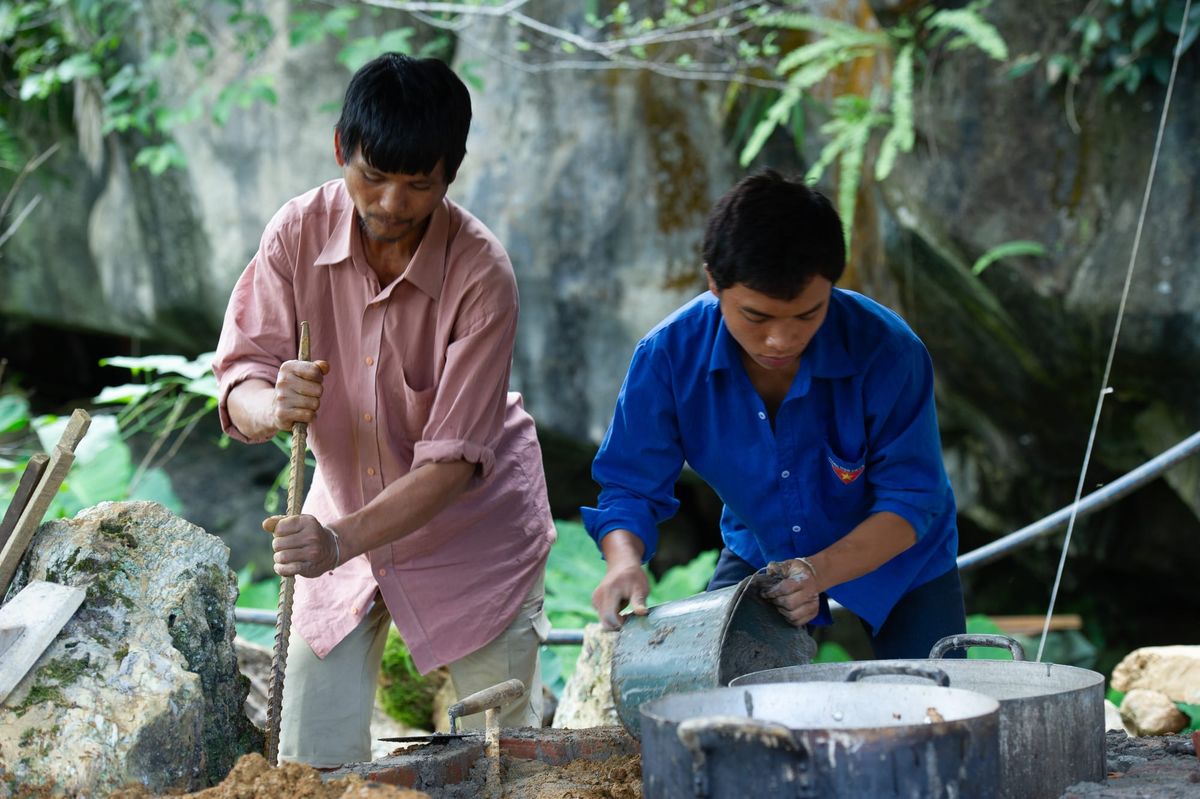
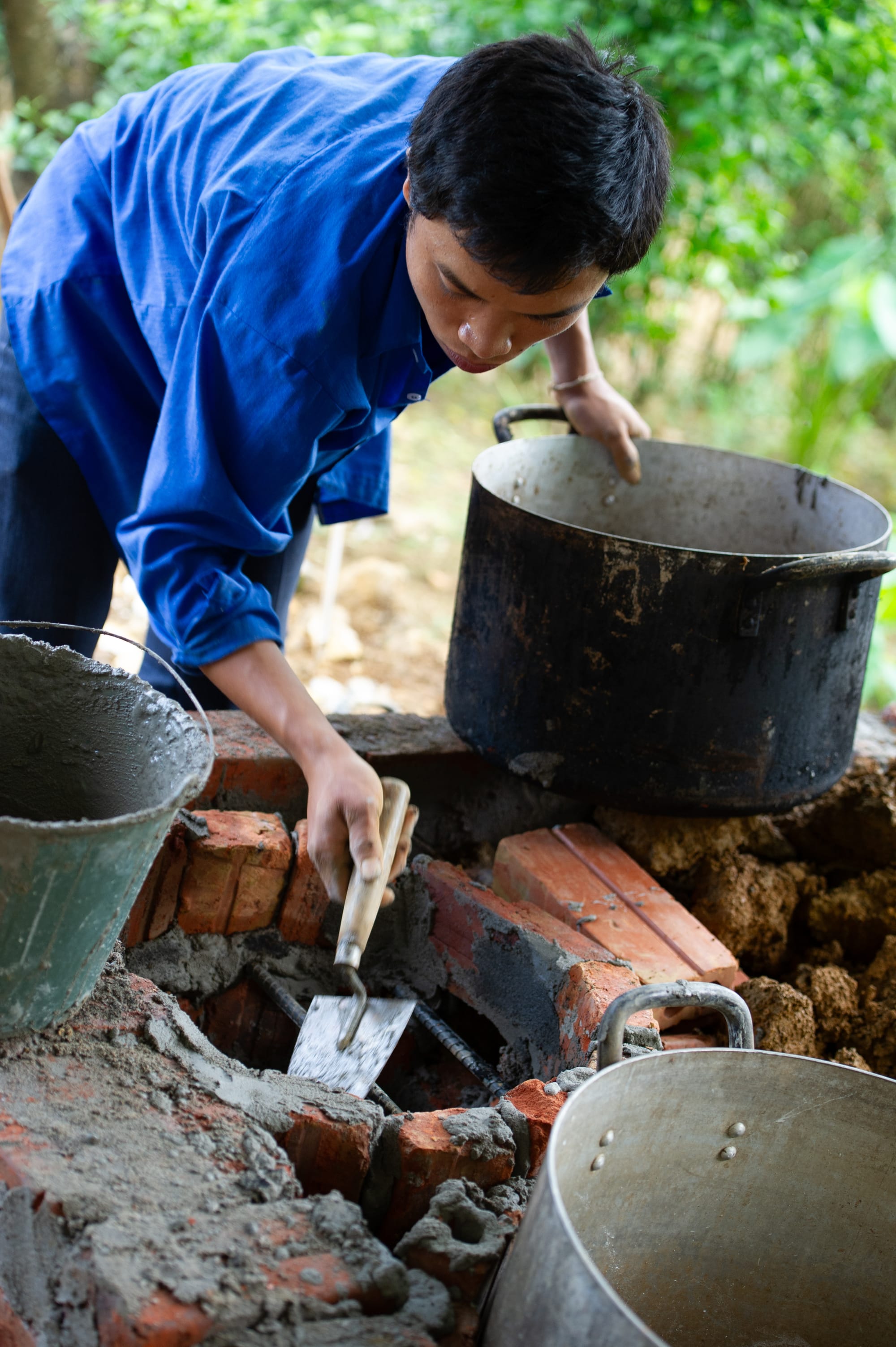
Following breakfast, I popped out for much of the morning to watch the man from the house put together, with his helper, I think he was a People's Committee or a Workers' Party or a Young Workers' Party participant, a brick firewood-fuelled eco-oven. I watched it constructed, and then the next morning before I left, I watched it being used for the first time.
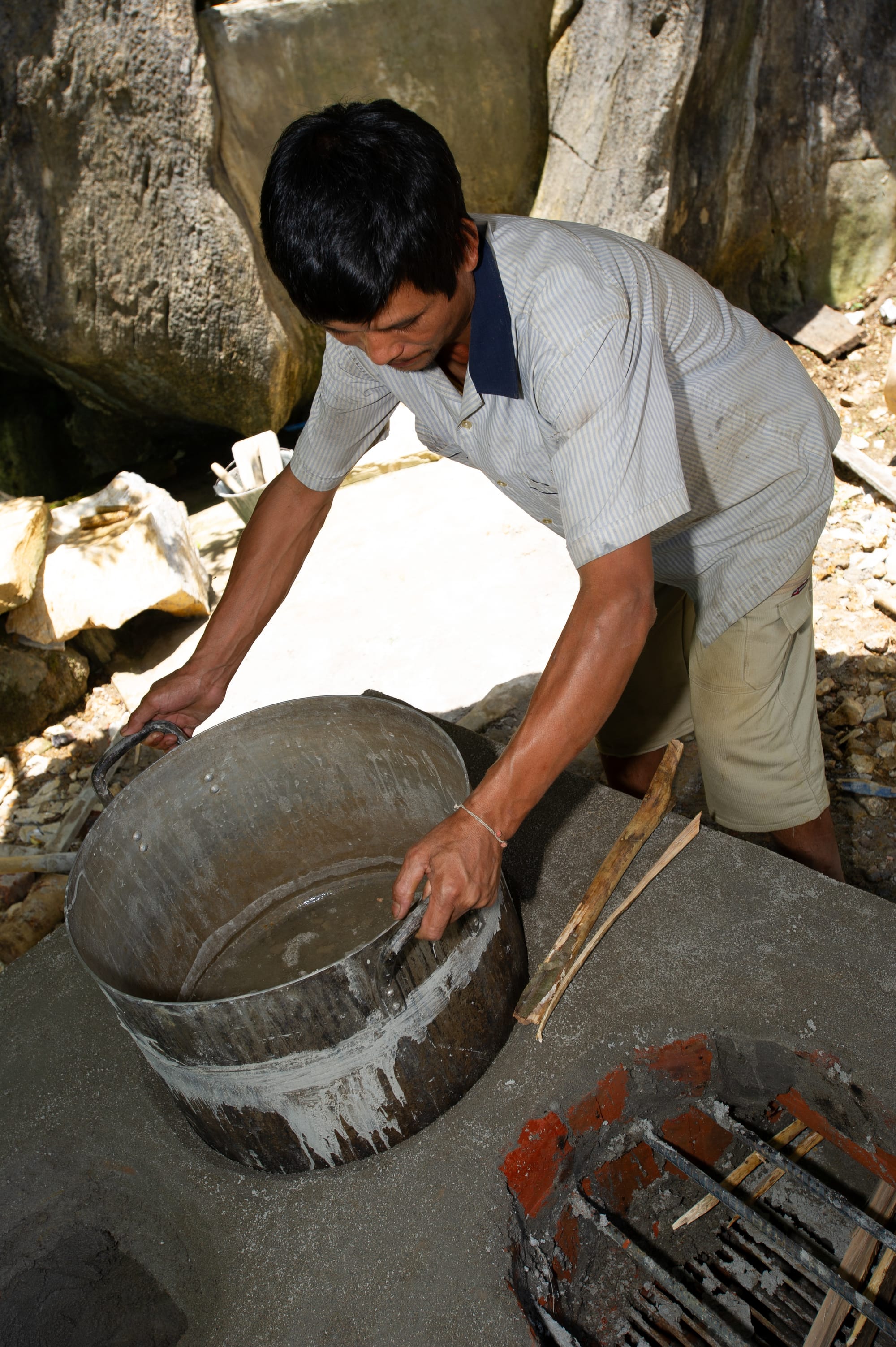
I didn't do any experimentation. I didn't have any laboratory thermometers. I didn't have any way to measure the calorific value of the chopped firewood that had been dried, but it did seemingly need to use less firewood. For the boiling of a huge pot of soup, certainly.
It looked like broth. I think what it was, likely for the pho-type noodles that they love to eat throughout Vietnam for breakfast. Or lunch. Or supper. Or snacks.
The oven seemingly was a great build. It was done in the day, in a morning really, and I guess it would be used over the next period of time, when they could cook outside if it wasn't too wet in the rainy season, or to reduce fuel.
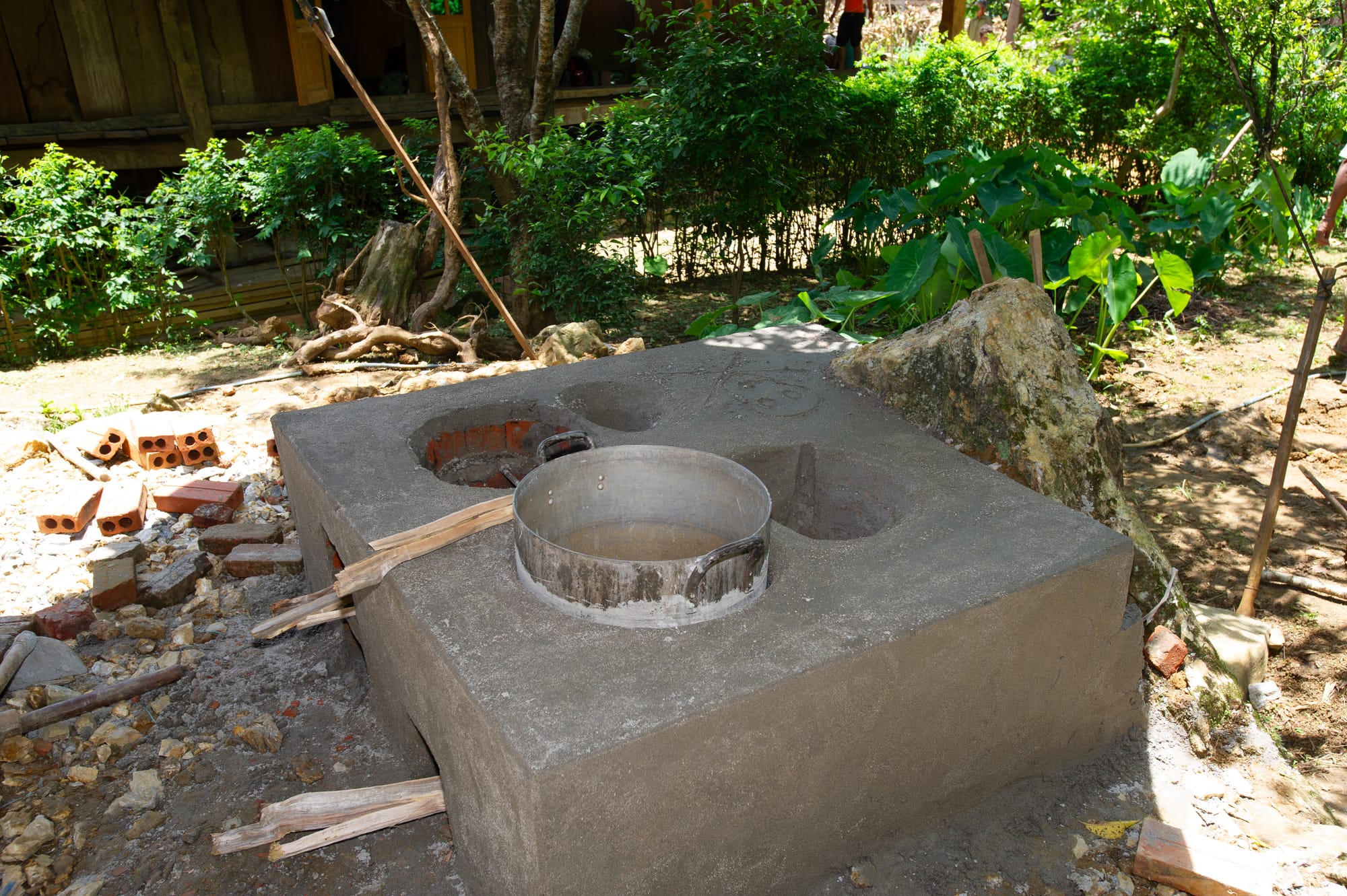
I've not been back since. This was a long time ago, almost 20 years now, and I would imagine that if it was a project that was worthwhile for the individual villagers and homes, then it would have spread throughout not only that village, but across the valley to other hamlets, simply because it was an eco-friendly way to reduce the amount of wood that was harvested on a daily basis from the jungle. If not, then perhaps it remains as a village eyesore, or a plinth for the house rice wine distillery producing a nectar that really does make your eyes sore.
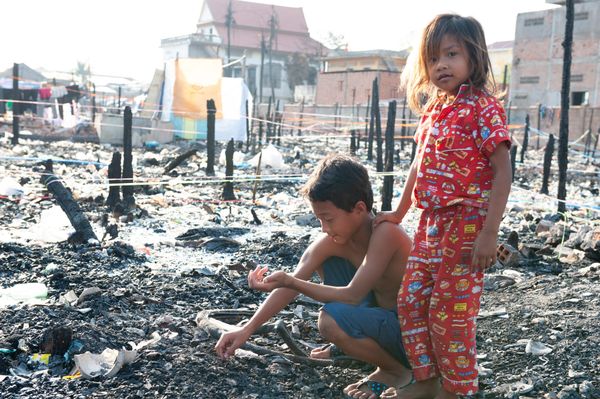
That's all I remember for this chapter. Look forward to seeing you in the next instalment. We're off to Cambodia to look at some housing settlements in Phnom Penh and some living conditions in and around that city in the period 2008 to 2012.
© Stephen Ford 2026