A Glimpse of Nai Be Village — Volume 2: The Rice Harvest.
Having spent the early years of my childhood living in a bungalow, its perimeter staked out with a sturdy - creosoted - wooden fence, adjacent to and surrounded by fields, wheat fields, sometimes hops, rarely cattle as they escaped - often.
The dangling hop heads, heads bowed in the rain or the strong wheat sheaves proudly swaying in the breeze signalled my summer vacation. Six weeks of bliss watching the wheat grow and then, sometime in August, when the farmer deemed it to be the moment, in came the combine harvester.
I'd climb onto the top of the smelly fence to watch its yellow body, boustrophedon style, traversing backwards and forwards, ejecting dust, polluting the atmosphere with its puffing exhaust pipe belching out black diesel smoke, offloading wheat grain from a large protruding side tube, blown out and collected by a trailer, synchronously towed alongside by a blue tractor, sometimes red.
The harvesting siblings.
Oh, I did so love to watch that behemoth moving quietly in the distance until it noisily churned by the side of my house.
Almost touching the fence as it passed. The front harvesting cage revolving steadily, munching the wheat sheaves into straw debris and dust, vented from the rear exhaust. Behind this wonder, another sibling, a specialised baling machine, collecting the loose straw, compressing it and binding it into bales to then be later collected, usually in the evening, by the farmer and one of his workers.
Ancient trailers with rusty iron wheels, loaded high with straw bales, tightly bound with bright orange twine, unstable they seemed to me, towed at snail’s pace, behind powerful tractors with their huge knobbly rear tyres, down the lanes and into the farmyard. To be used for bedding, I guess, for cows over the winter months. Cattle housed in, from the autumn to spring, wooden and corrugated tin sheds, never roaming freely on the grass fields that, in winter months, were either as hard and as slippery as glacier ice, or of a swamp-like consistency with puddles of brown water filling the thinly covered areas of grass or the hoof marks left by the heavy animals. No place for hefty bullocks and cows in winter.
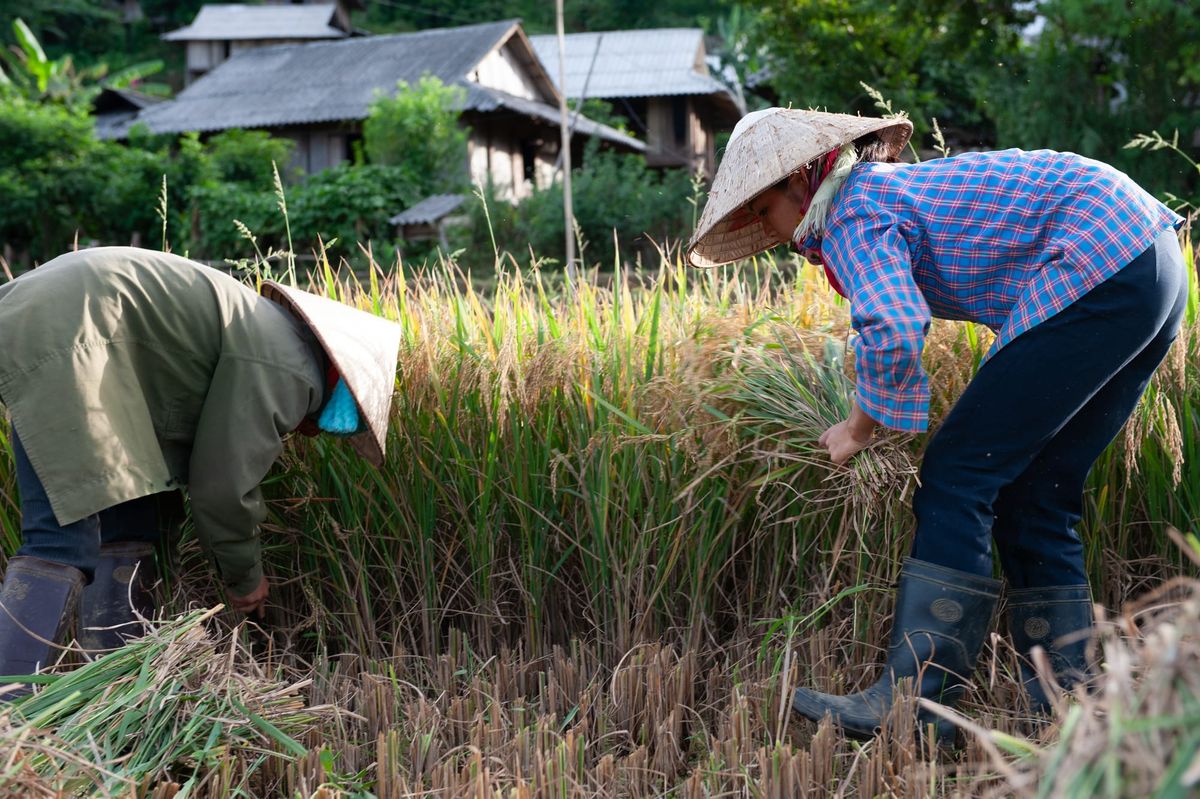
With memorable intent I walked, at l’heure bleue, down from the village into harvest areas of the summer rice fields of Nai Be.
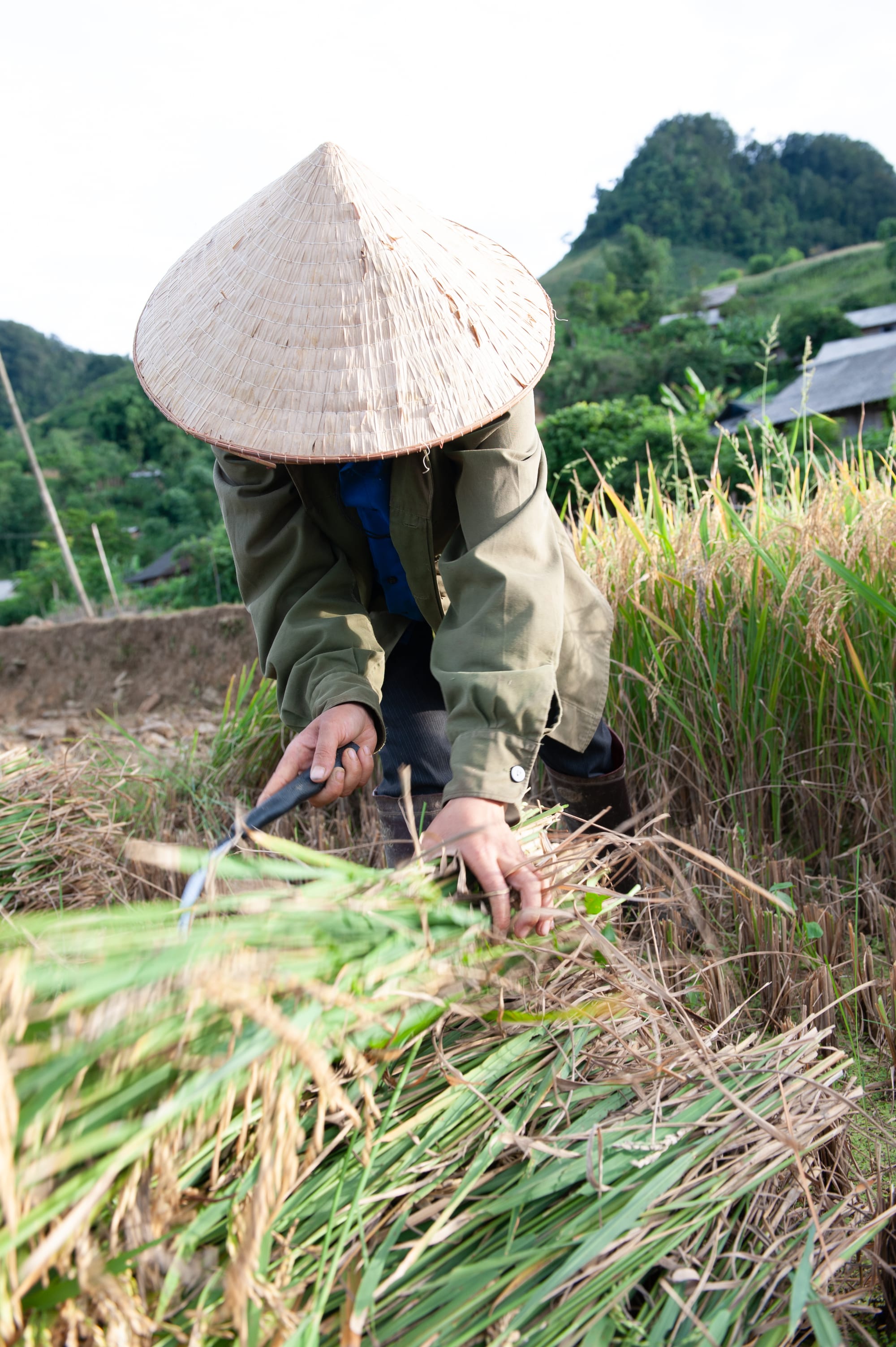
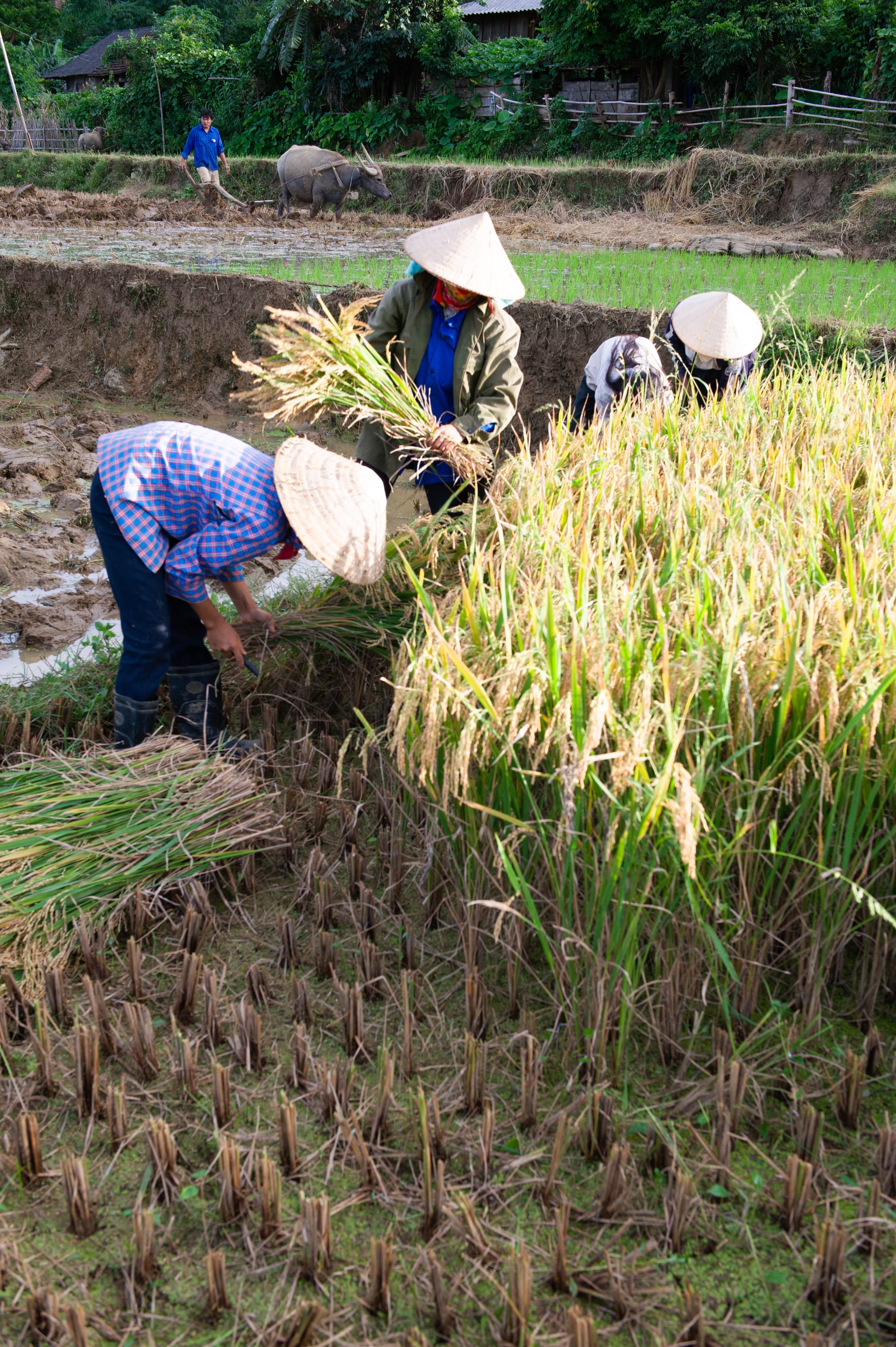
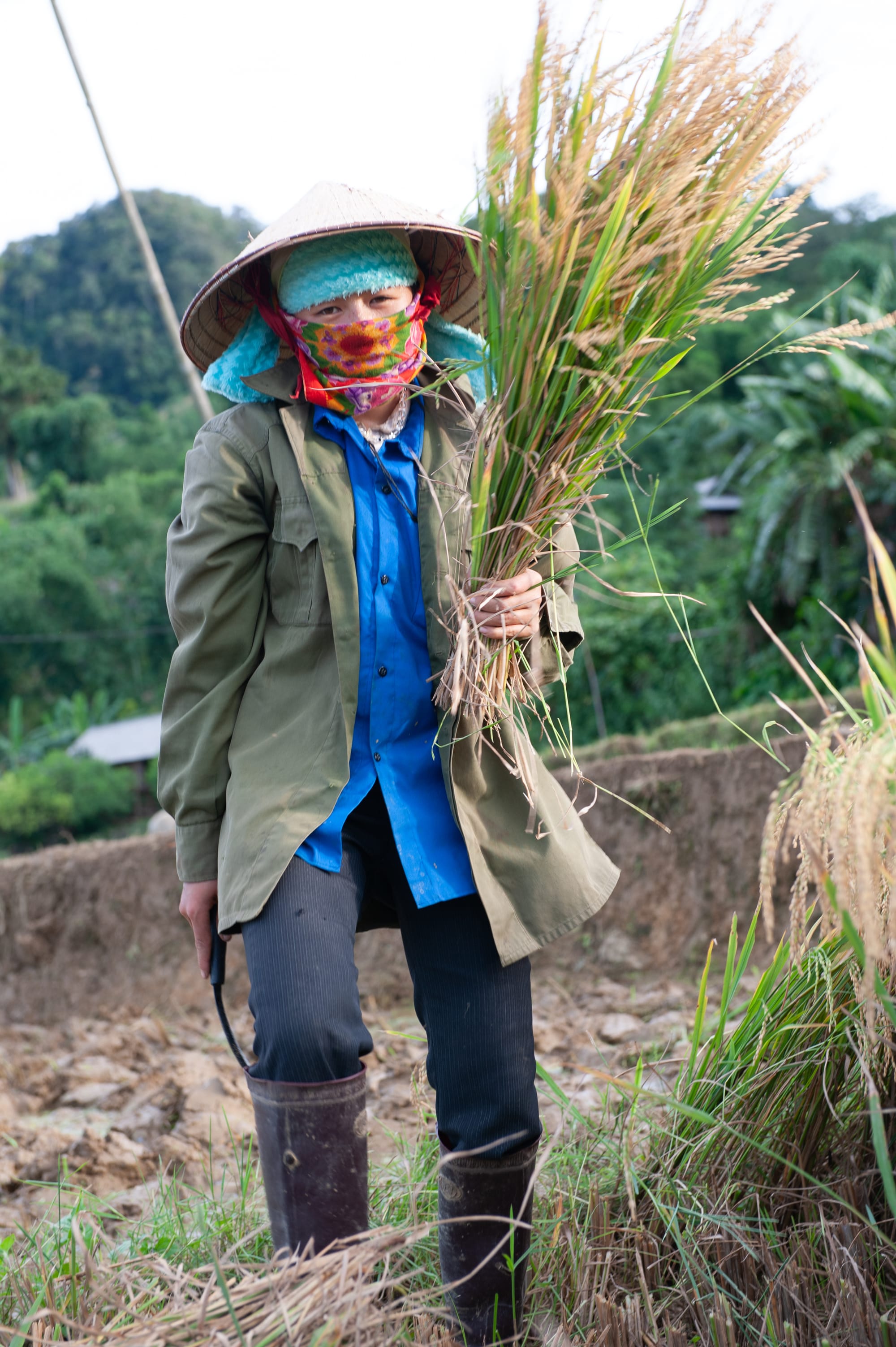
The top of the rice paddies, small plateaux on the gentle slope down the hill, coterminous with the edge of the village, accessed down the little path just wide enough to walk or for motorcycles, opened out as the fields were being harvested. Not this time as in my youth with huge mechanical machines, but cut with small, dextrously wielded sickles, held in strong and calloused hands, clearly sharp enough to shear through the stems, then held – collected - by the farmer, a worker from the village.
In Nai Be there was no mechanical threshing device to separate the rice, simply hand beating of the rice-laden stalks, manual threshing to get the rice seeds. And then, clearly needing to be dried out or aired before consumption, sale or storage, the grains set aside on large plastic sheets under the still hot, hot sun, and then out again on the following days.
The farmers appeared to use some sort of sieve-like grading system, presumably to remove the chaff and the waste parts, dried leaves perhaps from the plants, from the rice grain. In the case of Nai Be village, much of the harvest was then sold on to earn income for the village to purchase necessities, as all rural economies such as this.
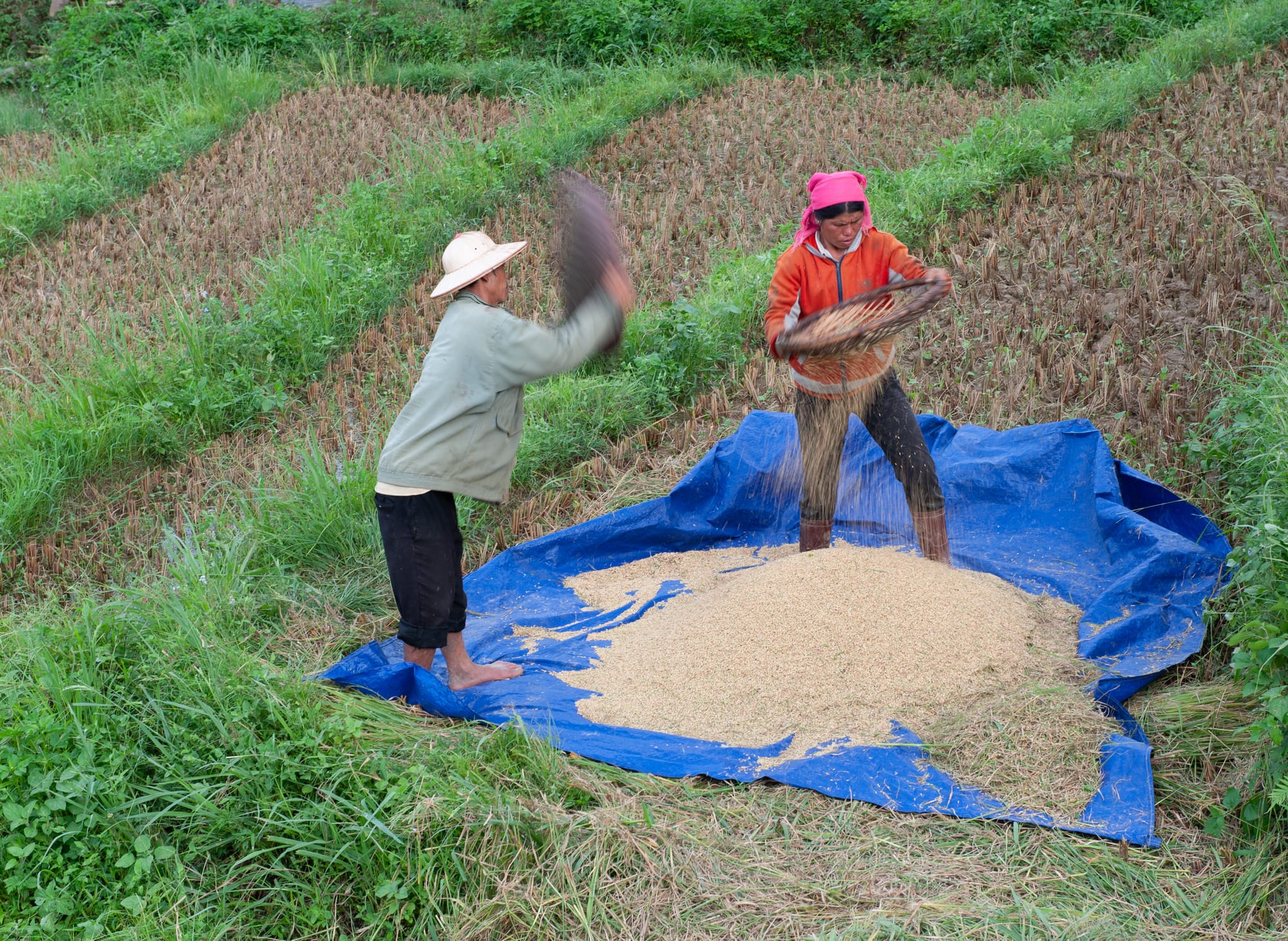
I never witnessed any baling of straw as in the English scenes from my childhood. However, I do know that many of the dried parts of the rice plants are burnt, perhaps introducing significant smoke and pollution into the atmosphere, once their fields have been cleaned. It's a very, very common practice, I believe, in Southeast Asia. And it certainly contributes to the elevated AQI readings in some of the bigger cities, particularly at or around rice harvest time.
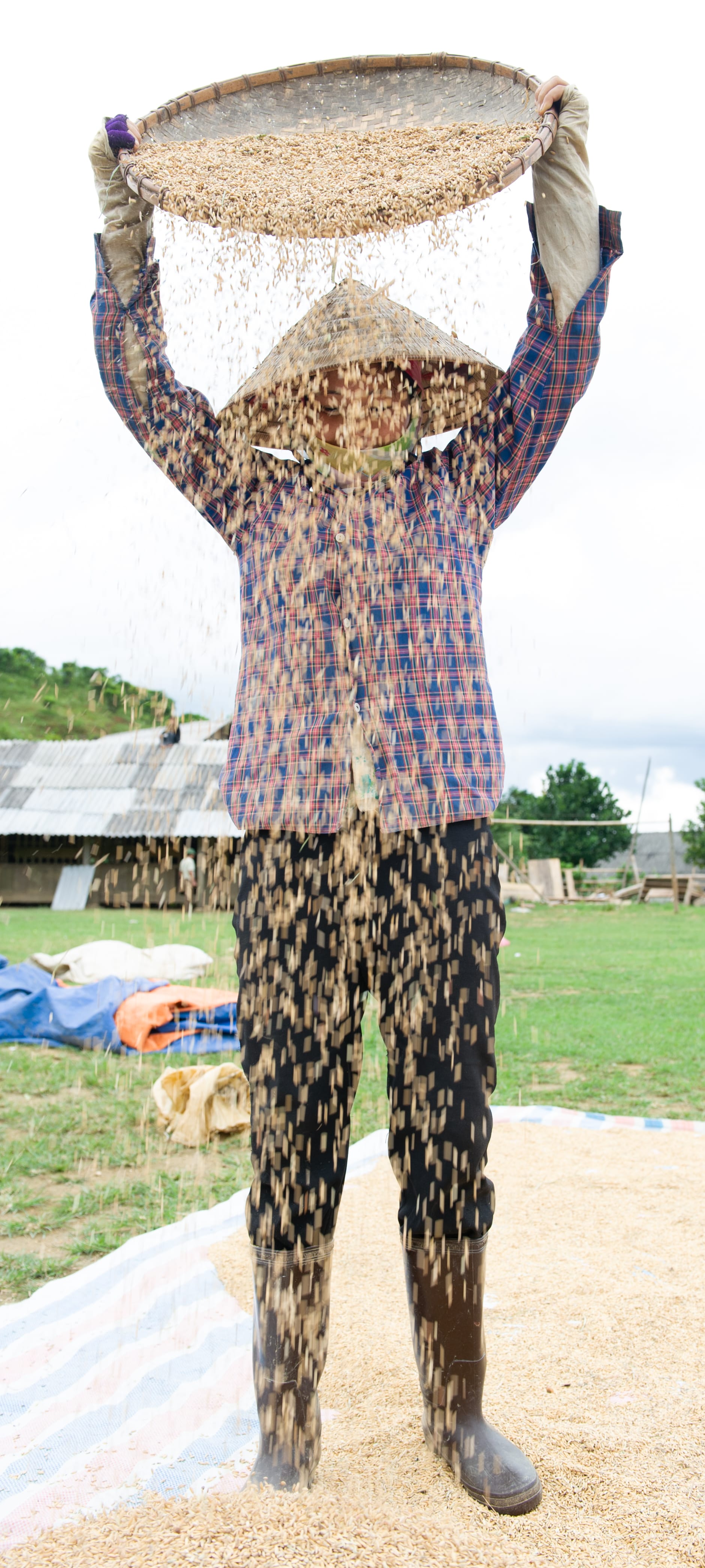
I walked through the fields, around the narrow pathways edging the paddies, a number of times over the four or five days I stayed there, observing this rural practice whilst reminiscing those childhood harvests of my youth, once a year, back in England. Here there are two, often three annual harvests, according to the villagers when questioned.
In these rice fields, I relished the opportunity to observe, first hand, not atop a wooden fence this time but afoot a boundary path, the rice harvest. Vivid, distant childhood memories of glee as the combine harvester first rolled into the wheat fields surrounding my family home in England, so far away, contrasted with the present: rice harvesting on this northern Vietnamese mountainside, still after all these years watching people collecting their carefully cultivated crops, harvesting them to feed their families or to earn some small cash income from their graft.
Stephen Ford © 2026.