Son Village - Volume 5: The Beekeeper.
Natural honey in Northern Vietnam.
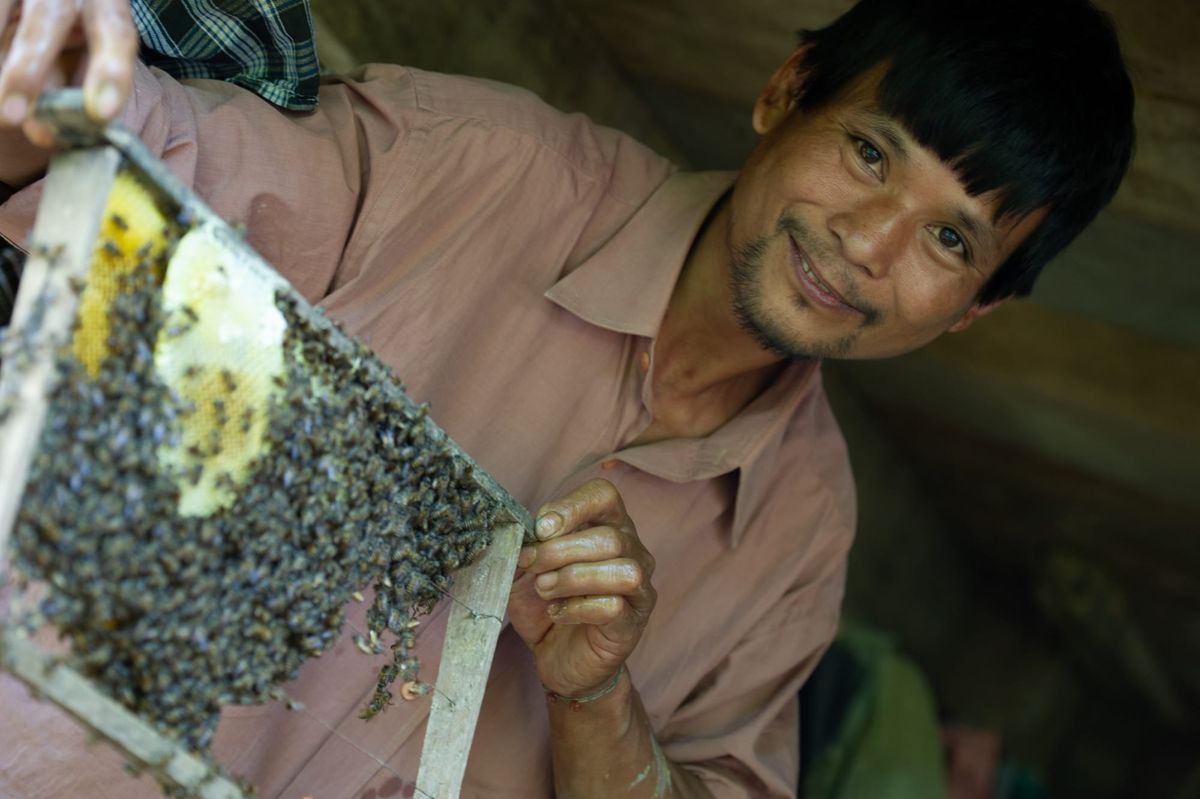
As a precaution, I put on a longish zoom-type lens to avoid getting too close. I didn't want to be stung.
The bees didn't seem to bother him. He was the son of The Old Man, the leader of the village, seemingly a relatively important keeper of the community but, as you can see by his hands and his body, he was a worker, and collecting the honey was one of his preferred tasks.
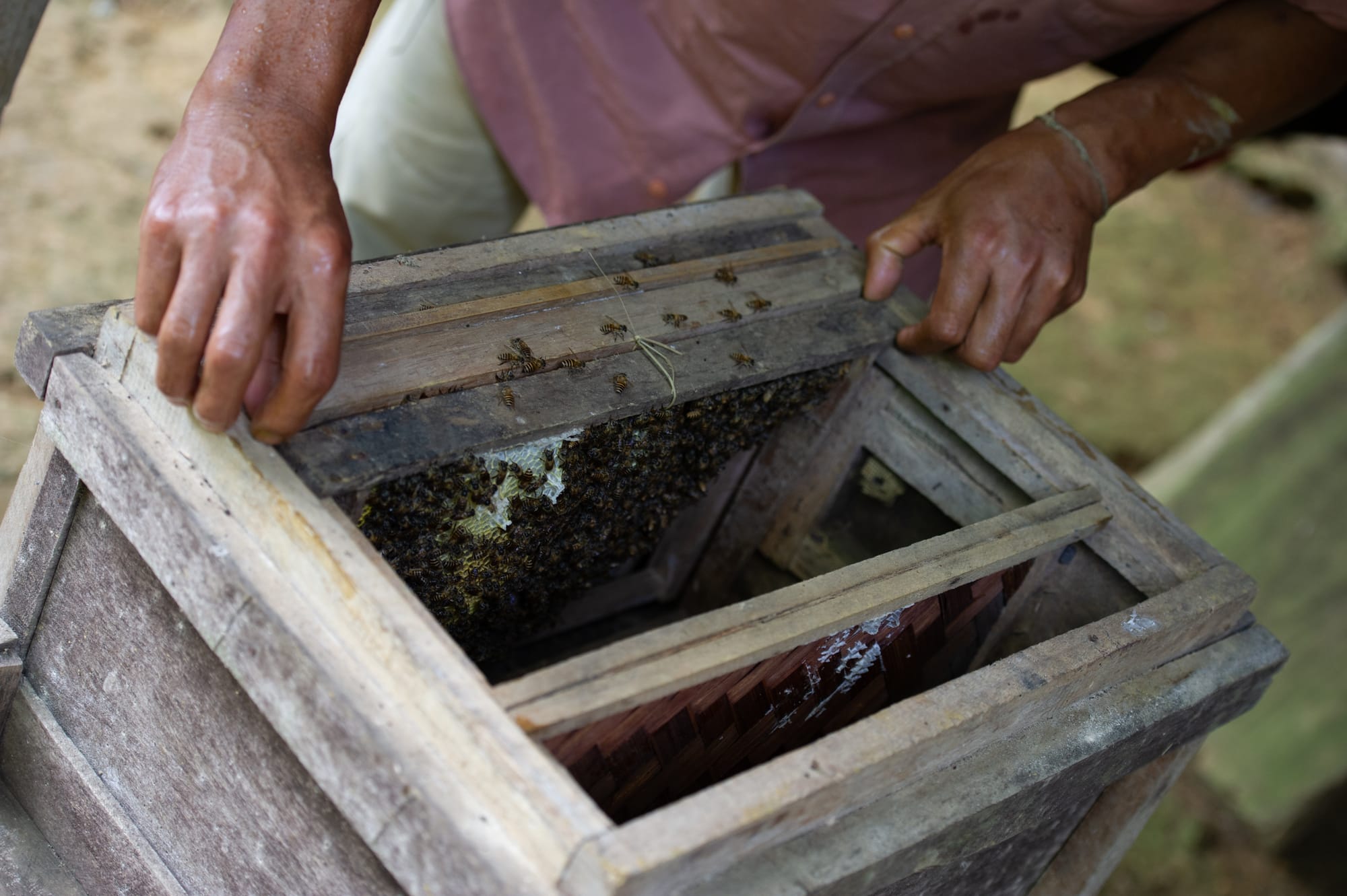
I wanted to smell the honey, to see how it compared to all those supermarket honeys and those craft fair honeys from the UK. Don’t they love to advertise - no chemicals - no colouring - no added sugar - and so on and so forth. I wanted to know just what a true remote mountain honey tasted of?
I snapped a couple of shots of him at one with his beehive and his bees.
I'll tell you the truth even though it’s not obvious in the images. The bees didn't really look like bees to me, not like the English bees that I'd been used to on the daffodils, or were they tulips perhaps? Those always hiding away in the rose heads in my father's Derbyshire cottage garden situated around a remote bungalow, surrounded by fields and hedges, the only place I grew up in.
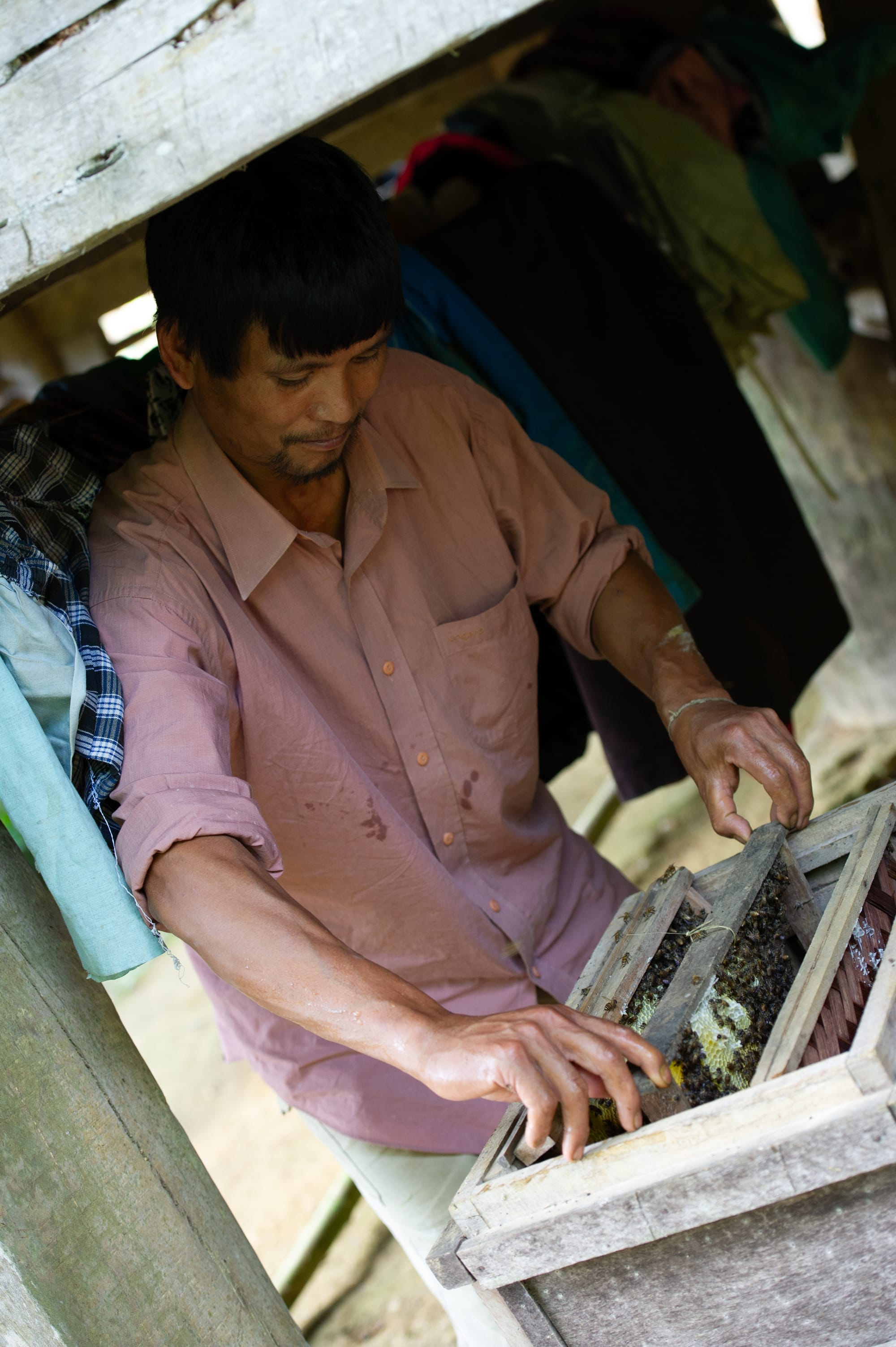
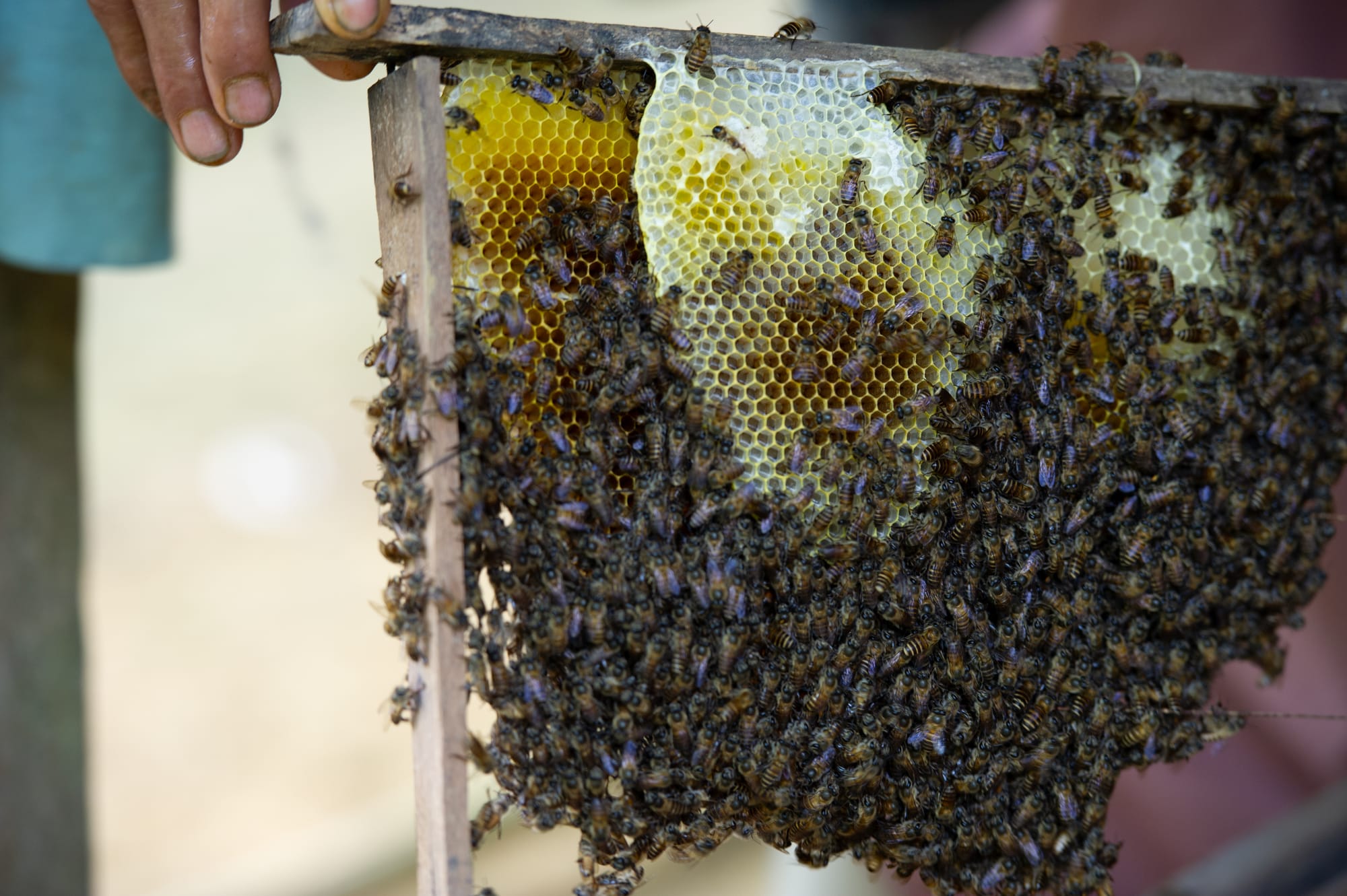
So no, they didn't look like normal bees, or bumblebees, as I used to call them as a child. They looked more like wasp-type bees, quite frightening to me. Not as big as the bellicose hornets, of course, which I'd seen in the trees around the village, but also not like the great fat black and yellow bumblebee that I was used to in the UK through my childhood years.
Sad to say but the truth is this: I can't really remember - it was a long time ago - how distinctive the honey flavour was. As I think back, it simply tasted to me of the mountains and of the valleys where I was staying. It was sweet, but not sugary sweet; almost a bark flavour as if tainted and from the trees around the settlement.
I don't know where the bees collected their pollen from: what flowers, which areas of the hillside or the mountain’s flora. It simply tasted uniquely of a mountain honey. Absolutely natural. No chemical flavour at all.
And I know this is a somewhat uncouth observation as, I’m no connoisseur of foodstuffs: it was simply a rather delicious sweetener in a hot cup of early morning tea, an energiser before I started the day's trek back down the long, long hillside to the valley on the journey home.
(c) Stephen Ford 2026.