Son Village - Volume 4: Collecting Firewood Before Breakfast
Collecting firewood for fuel from the jungle forests in Northern Vietnam.
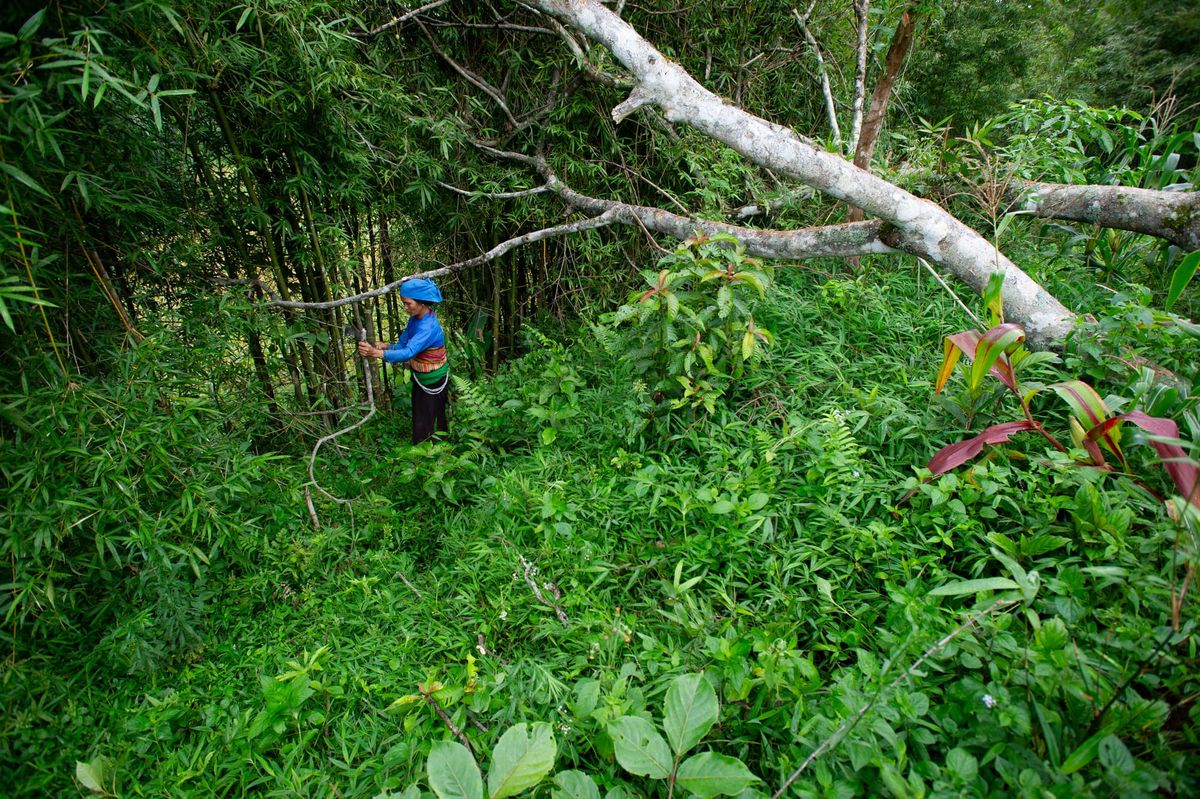
At some ungodly hour, my alarm quietly vibrated. Still night, pitch black, even the cockerels had yet to commence their reveille. I roused, felt my way around my bed area to locate my clothes. I only had this one-time opportunity to hike into the dense forest with a villager, to follow her and observe a daily ritual: the chopping and harvesting of firewood from fallen trees and thus sourcing fuel for the family’s hearth.
The previous evening I'd watched her working into the dim failing light as she finished ploughing the paddy, followed by supper with her family and finally, slumber around nine pm. The opportunity to observe the atmosphere of her dawn march into the dense forest of the North Vietnamese hills, and to see another facet of her daily toil brought life back from my sleep.
I donned my boots on the steps outside the old wooden house, threw my camera into my rucksack knowing full well she was in her sandals and would not wait long for this curious visitor to follow her. I trailed in her wake, up a steep, undulating hillside, a seemingly circuitous ascent with many false peaks dashing my hopes. Not rubble-strewn as a gully on Tryfan in North Wales, or muddy as a Derbyshire dale in autumn; simply a rain-washed, polished limestone trail worn from many years of passage: slippery, steep and, for me, exhausting. My lungs, now needing to inhale deeply the humid morning air, still a modicum cool at the dawn of the day, worked fast as I struggled to follow her, now getting farther away from the commune of Son Village. The undisturbed, peaceful calm of this truly natural environment focused the clomping beat of my rubber trekking boots, a vivid auditory contrast to the nimble, silent footwork ahead of me.
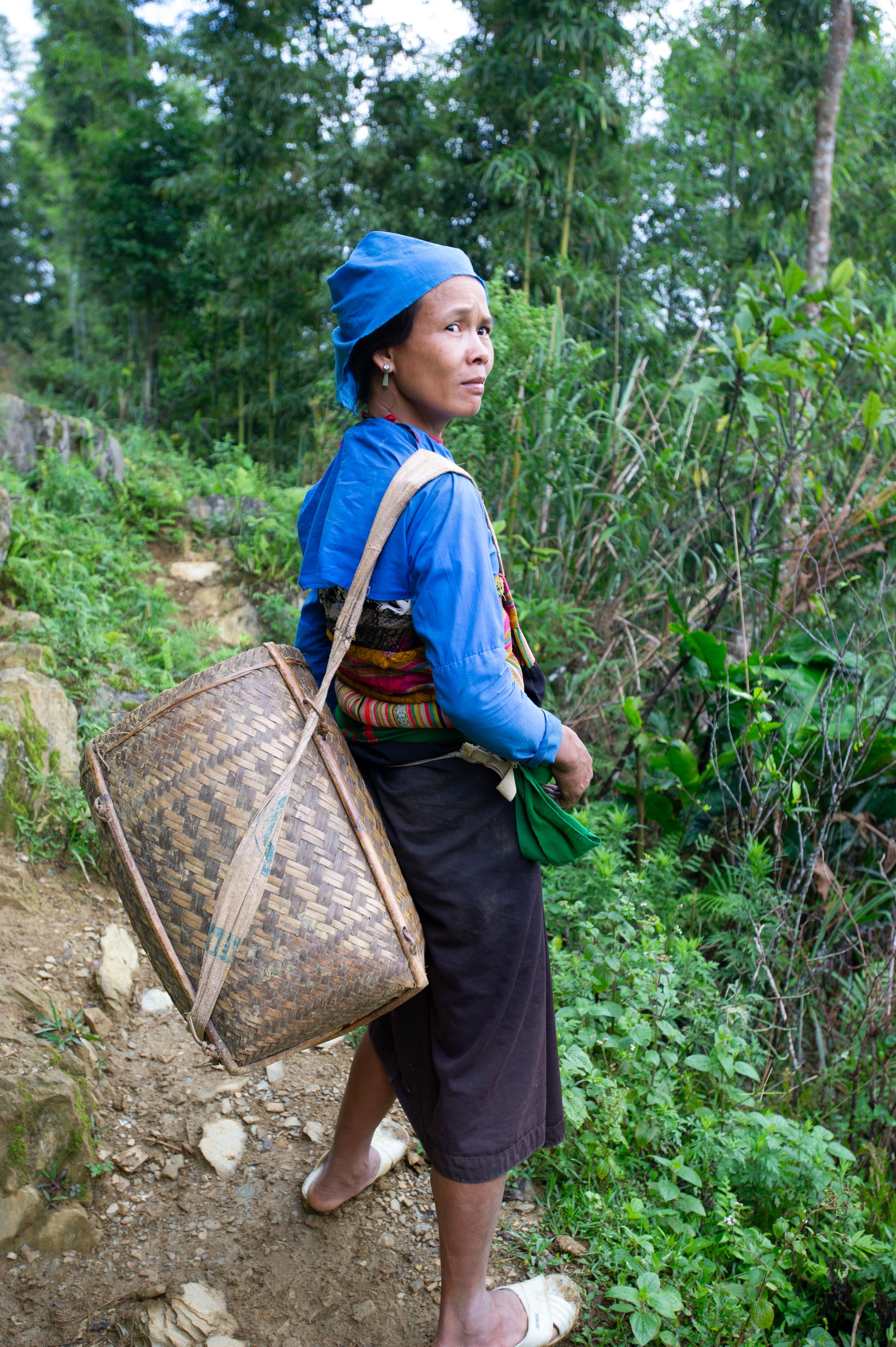
She was certainly younger than me, likely mid-thirties; I was a relatively fit mountaineering instructor in my mid-forties, content with trekking and running in the Welsh hills for my leisure pursuits; she had a physique which seemed honed, engineered, by a life of toil and movement on the steep mountainous valleys surrounding her village. Her lithe, powerful frame, tiny in comparison to most Westerners, moved with a celerity not notably apparent when she was resting and still.
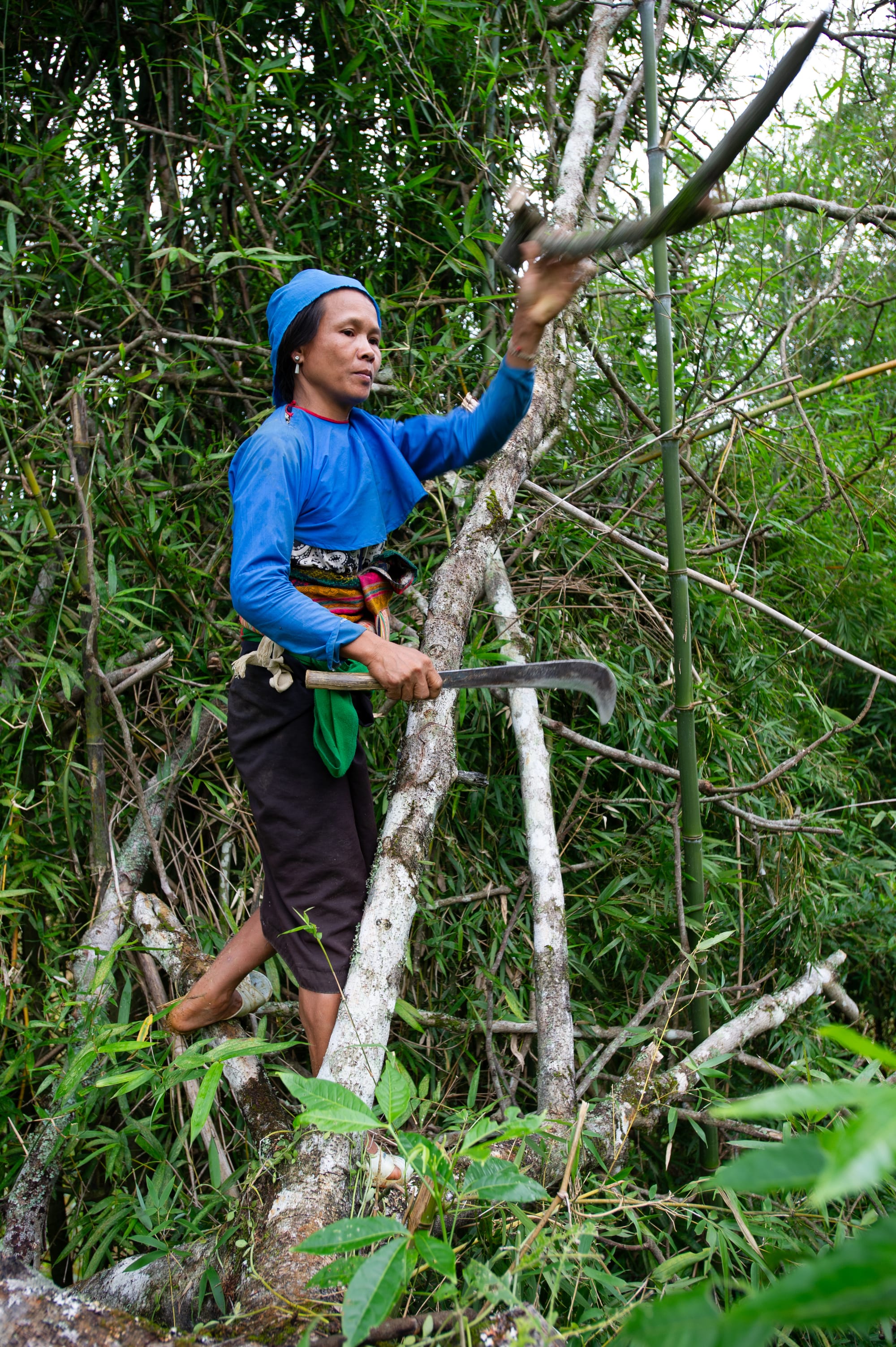
A basket strapped onto her back, her sharpened knife, a forged machete in hand: a worker’s tools to chop wood and then to transport it home.
Her hands were noteworthy. Quite the opposite to the huge miner’s coal-stained paws I’d anxiously watched lift steel girders as a youngster learning in my first employment after school, nothing of her palms or digits resembled an office manager’s soft, delicate fingers. Simply put, they were powerful and used, the joints, knurled and lumpy, with the visible wear and tear of her face, hands and feet patently evident. Certainly not manicured or pedicured. When you look at your hands, they reflect your life, clearly a printed history of the work you’ve undertaken. Hers illuminated the hardships and realities of life in a remote mountain village.
Two and a half, maybe three kilometres into the forest, the overhanging leafy canopy now turned the still air musty, a lifeless scent of the forest not unlike that unique smell of a sawmill on a damp, rainy November day. Did it rain in the night? I heard nothing as I slept. Today, however, everything was damp, additionally so for me as my shirt was soaked, sodden with sweat from the humid walk to work.
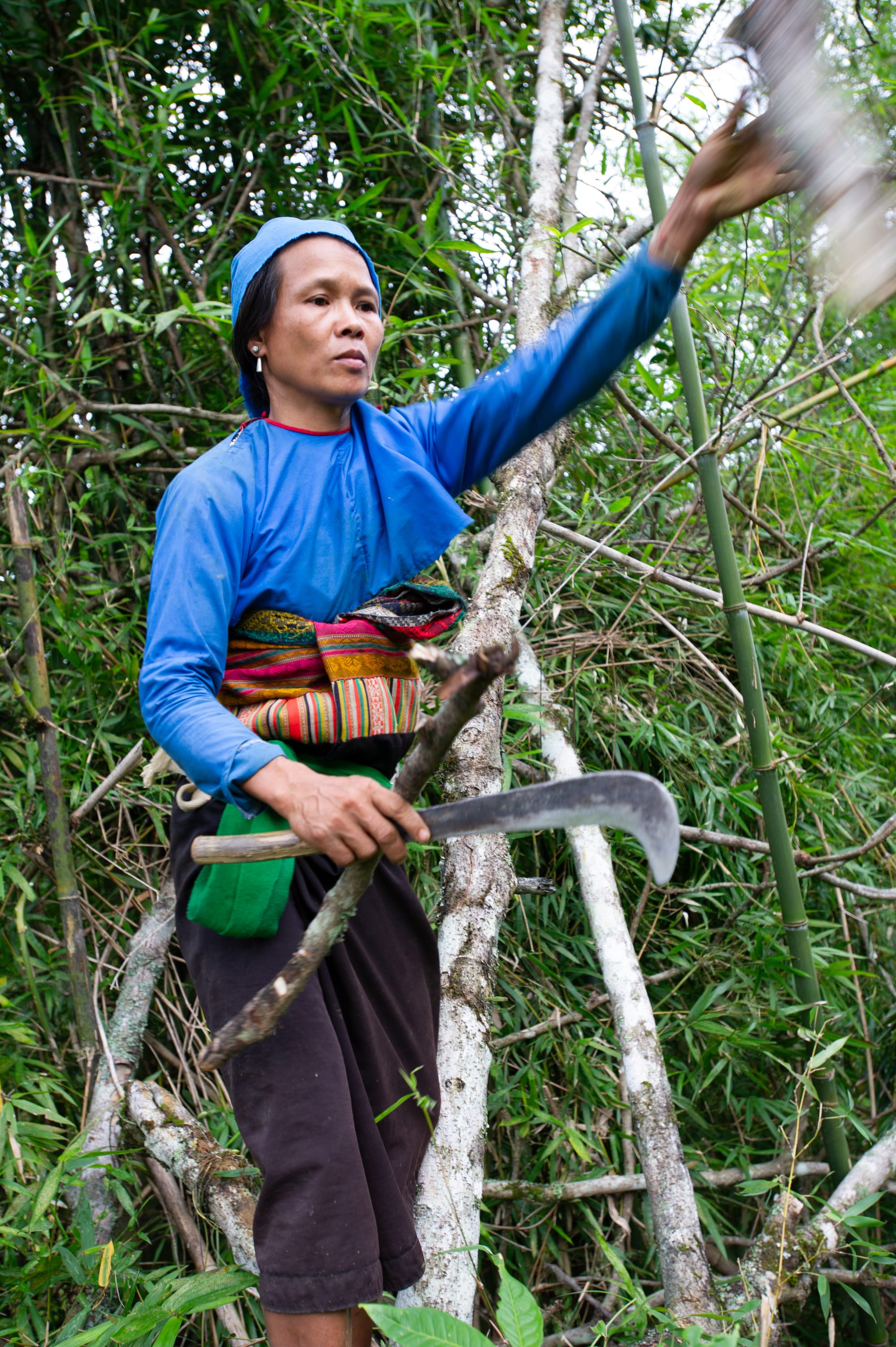
Camera angles and perspective mean everything when trying to depict an environment in a documentary photograph. I stood above her, sometimes below, as I attempted to record some photographs in the gloomy grey dawn-light of that early morning. I popped on a flash to get some more light; you can probably see that in some of my attempted shots. I wished to explain photographically the reality of her task as she toiled in a damp, dimly illuminated workspace. Why it was the woman of the house marching into the rainforest and up the mountainside to collect the fire-wood never crossed my mind, it seemed to be so natural.
She split the wood with precision founded upon an efficient movement of a balanced body, often needing to teeter on precarious thin branches or trunks to extend her reach. Never a perfunctory blow. Each swipe of the machete took with it another piece of kindling or thicker wood to be dried for the kitchen fire. She hacked through the thicker branches with aimed and forceful blows, restrained, efficient axing, her wonderfully refined movements simply designed to take any fuel material which she could harvest without damaging the ecosystem or destroying the remaining bark, saplings, trees. She never cut down growing trees; she wanted to ensure that she recycled wind-fallen branches, the dying wood that could be burnt on the family stove.
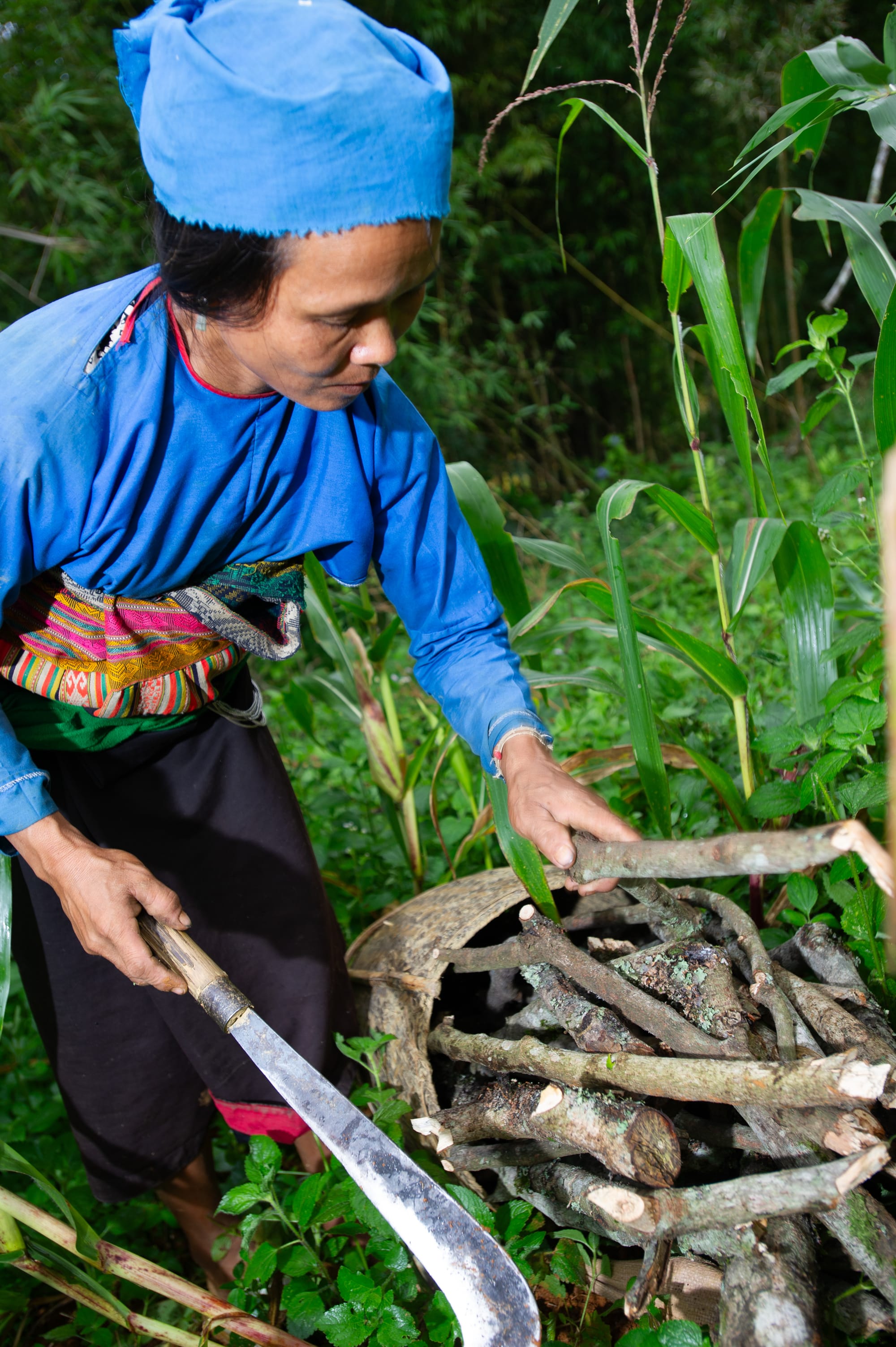
Following 40 minutes or so of chopping, then removing twiglets and de-leafing the firewood, she packed the basket with this morning’s load, wiped the machete and knife, hoisted the equipment and fuel onto her back to then begin the trek back down the hillside towards Son village. She explained to me later that she avoided cutting down growing or healthy trees.
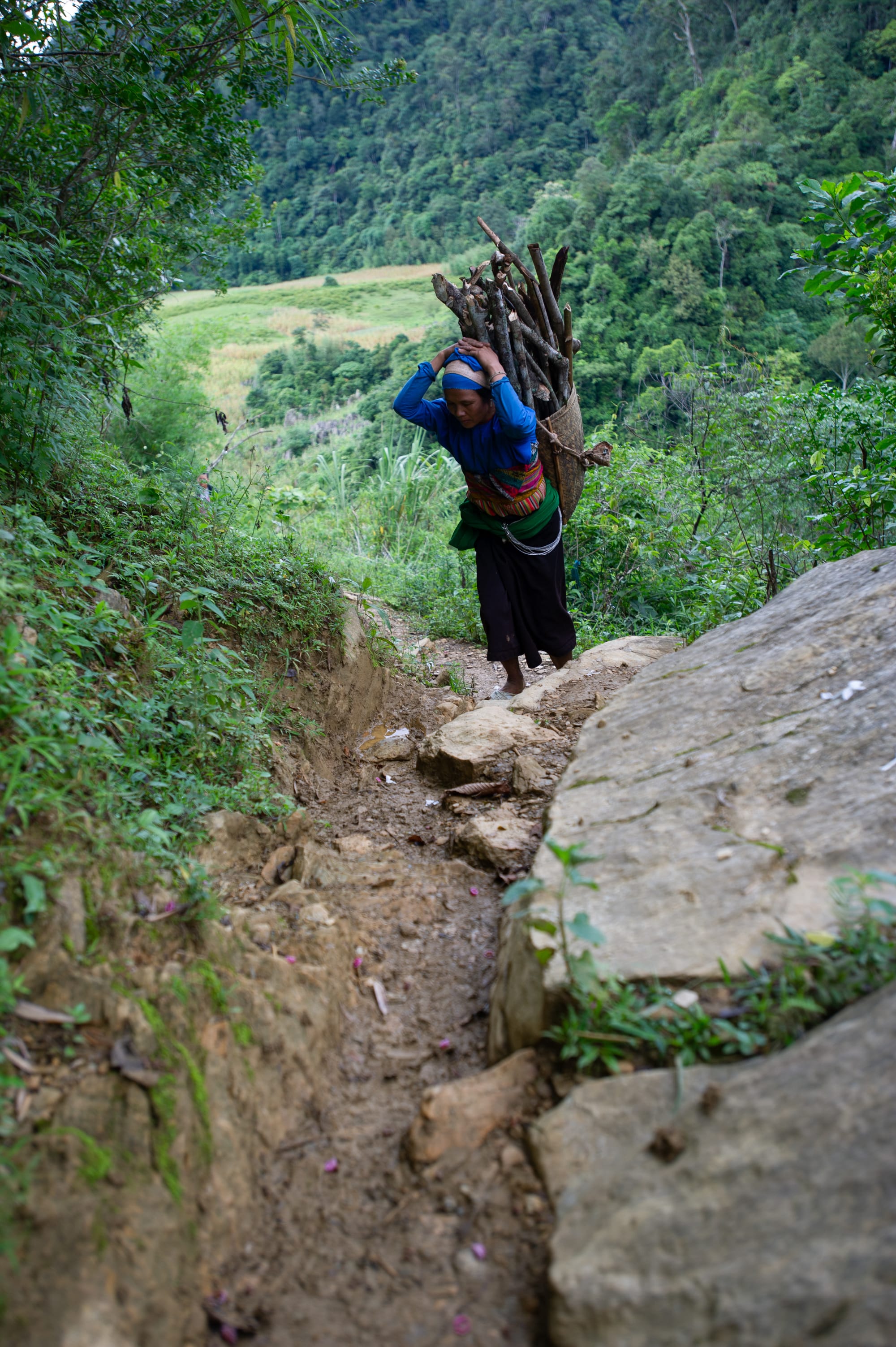
She was now carrying perhaps 10 to 15 kilograms of dense wooden sticks, heavier than most trekkers’ backpacks. It made little difference to her dexterity. She descended the rugged path swiftly, sometimes steeply downhill, sometimes gaining height again as the path traversed and ascended yet another tiny knoll before meandering its way back to her home.
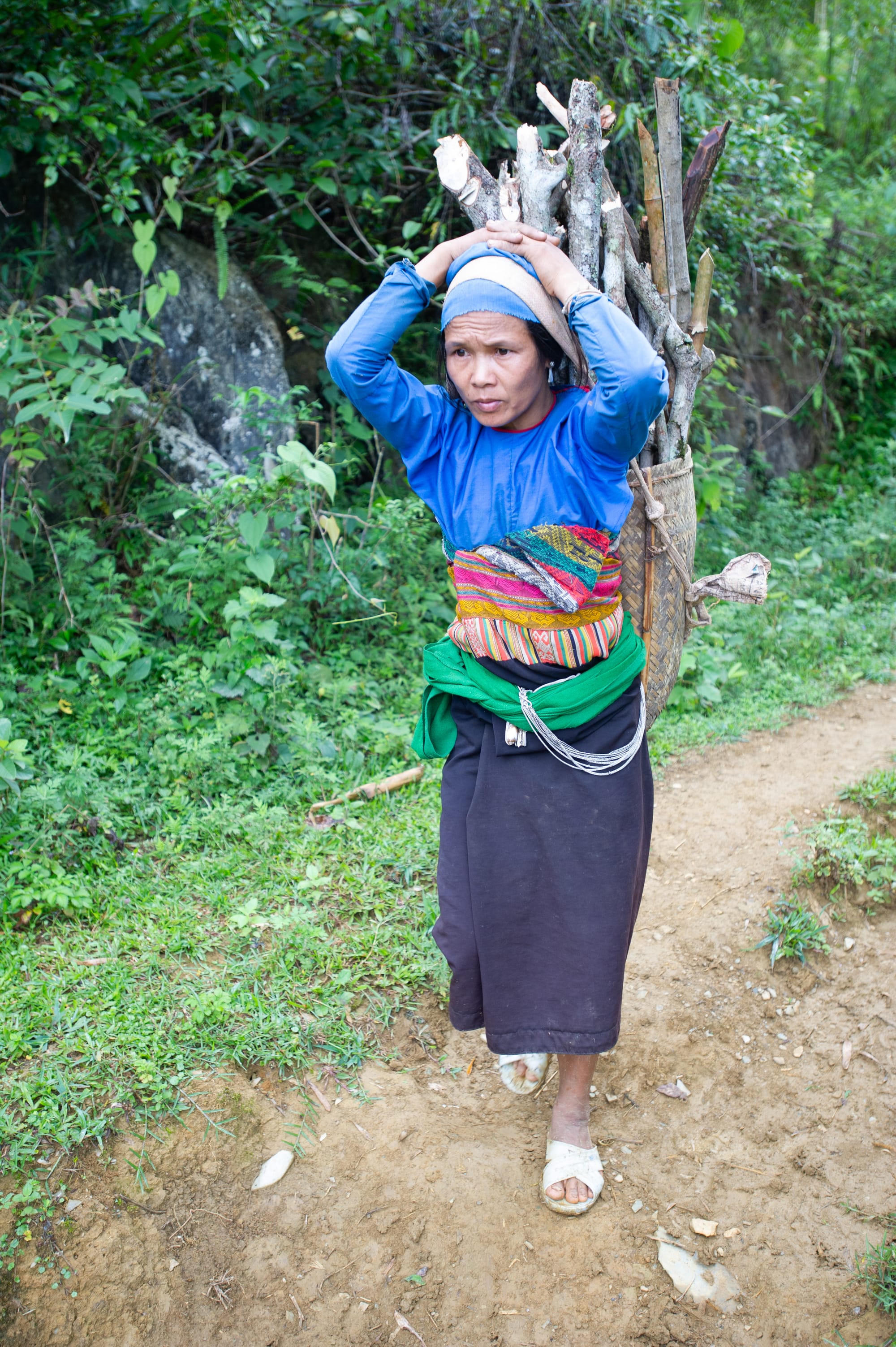
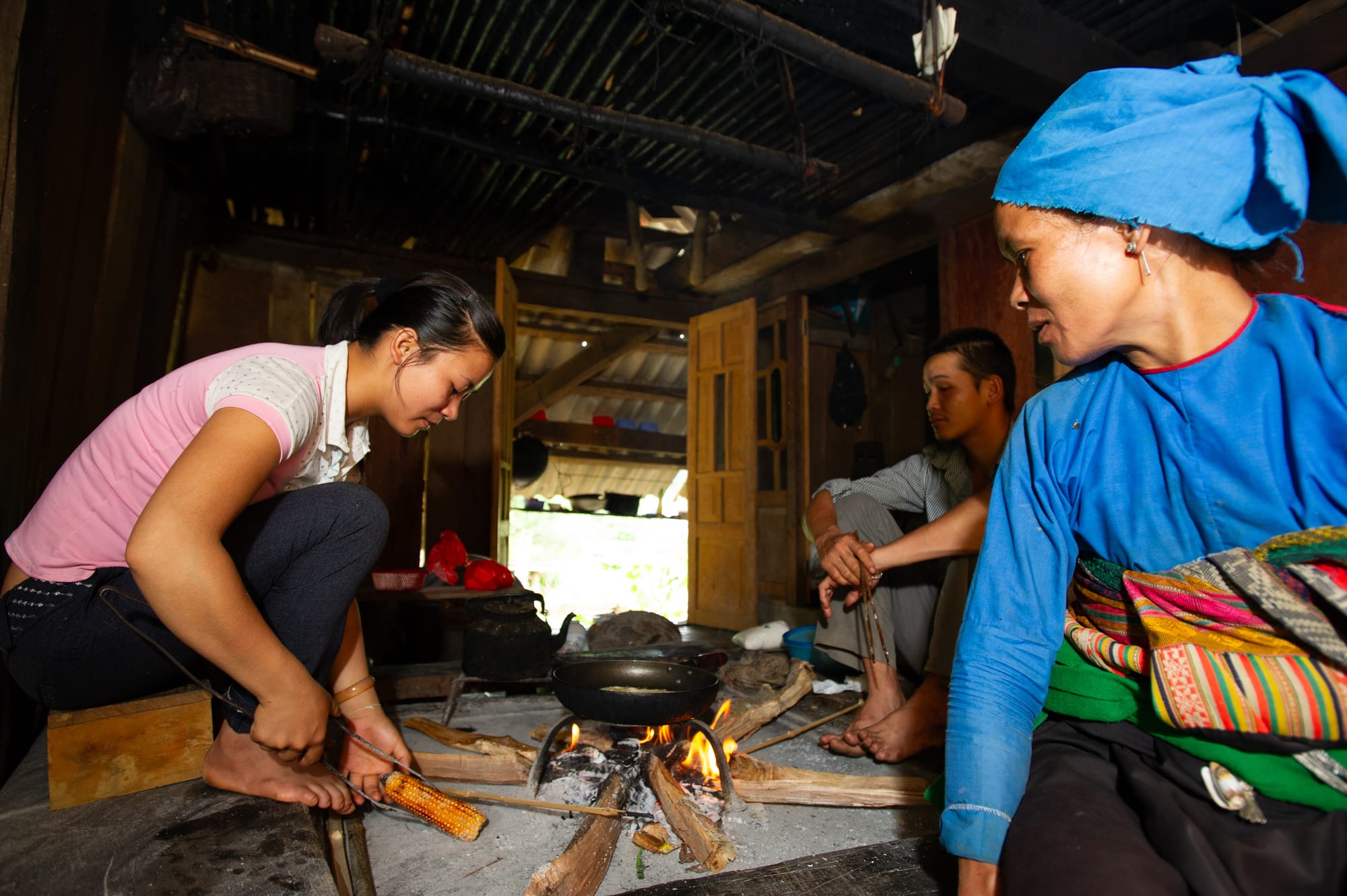
Greeted warmly in the kitchen by her daughter and her son, her husband stored away the firewood in a perfectly manicured log store – the cut fuel now drying until it was needed for the stove - similar in magnitude to those seen in a picturesque Swiss village. She rinsed her hands, then sat waiting for her morning coffee to be brewed on the ember fire set in the kitchen hearth. Her reward and contentment: family time, morning breakfast - coffee with noodles and soup - together with a little rest before her next task of the day.